An IP-backed wearable edge platform that fuses vision, infrared, inertial sensing, microphones, and on-device compute for contextual awareness and auditory guidance. Pending U.S. App. No. 19/560,372 — Head-Mounted Device with Contextual Awareness Contact For more details
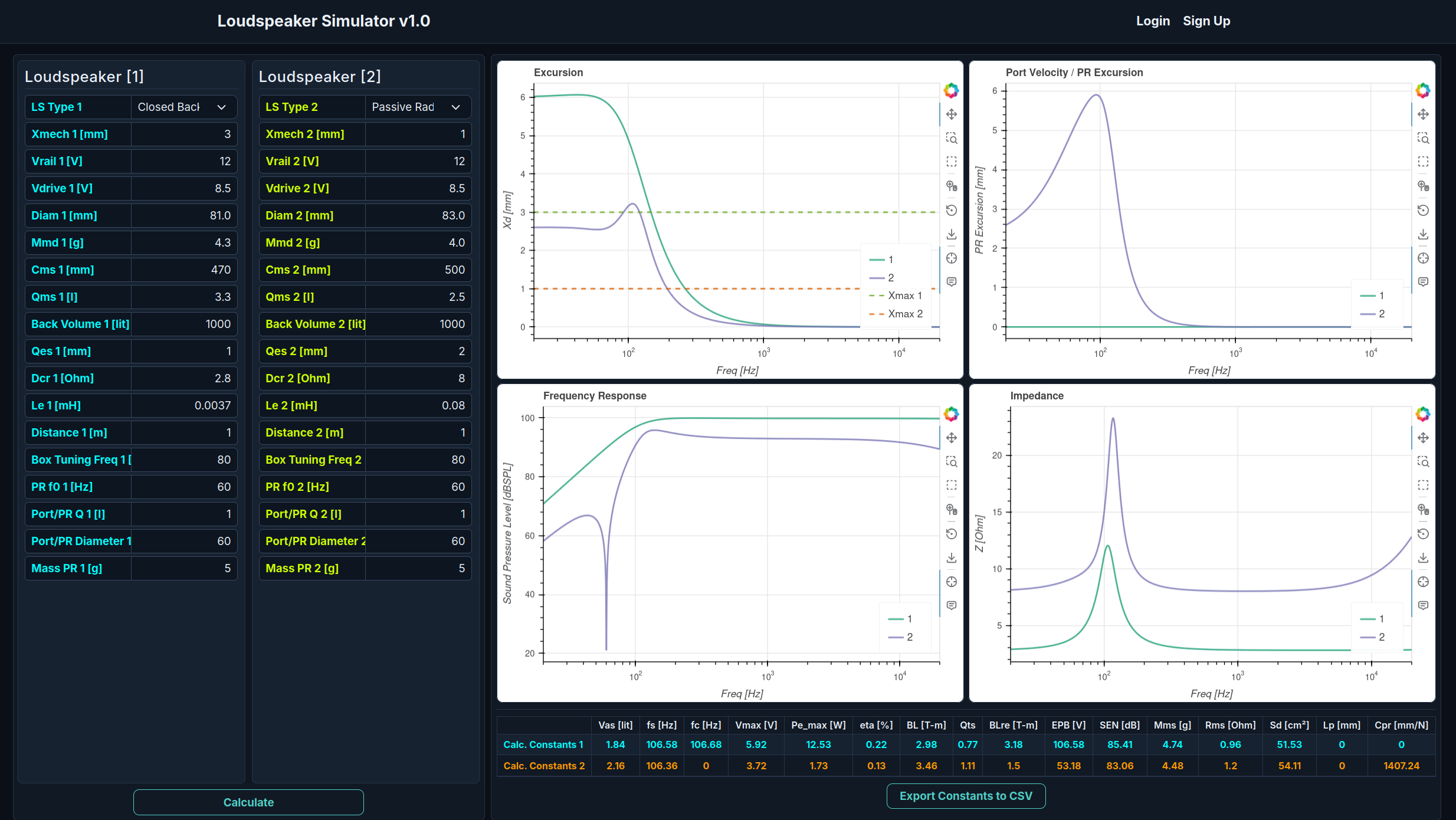
Browser-based loudspeaker linear-parameter (LPM) simulator for comparing two driver/system designs side by side before hardware builds. Highlights include:
Dual-system compare — edit two loudspeakers in parallel and see differences immediately
Enclosure types — closed-back, bass-reflex, and passive-radiator models per speaker
Response plots — frequency response (SPL), cone excursion, impedance, and port velocity / passive-radiator excursion
Derived constants — design quantities such as Vas, fs, Qts, BL, sensitivity, thermal limits, and related enclosure/port parameters
Interactive dashboard — live plots and a calculated-constants table as parameters change
Runs locally or on remote hosts (including Raspberry Pi-class deployments). Implementation details are proprietary.
Loudspeaker LPM Simulation Tool Demo
Loudspeaker Magnetics Simulation Tool
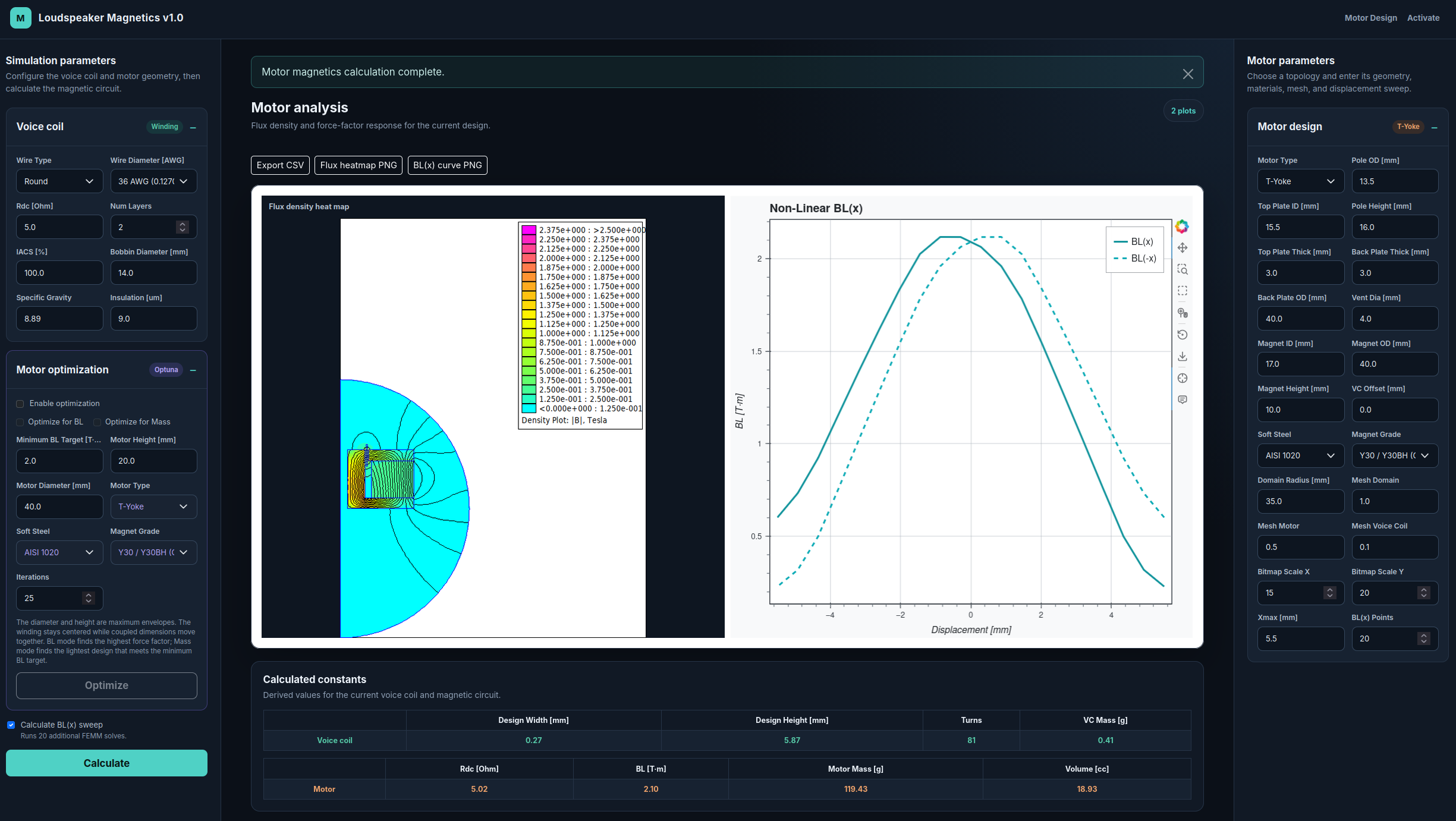
Finite-element magnetics workflow for loudspeaker motor design—iterate the magnetic circuit from geometry before cutting metal. Highlights include:
Voice-coil geometry — turn count, DC resistance, dimensions, and moving mass from wire and bobbin inputs
Motor force factor — estimate BL and related electromotive properties from pole, magnet, and coil layout
Mass & packaging — motor mass and volume for system-level trade studies
Field visualization — flux-density heat maps of the motor domain
Stroke behavior — non-linear BL(x) curves across excursion for motor linearity checks
Implementation details are proprietary.
Loudspeaker Magnetics Simulation Tool Demo
Audio Test App
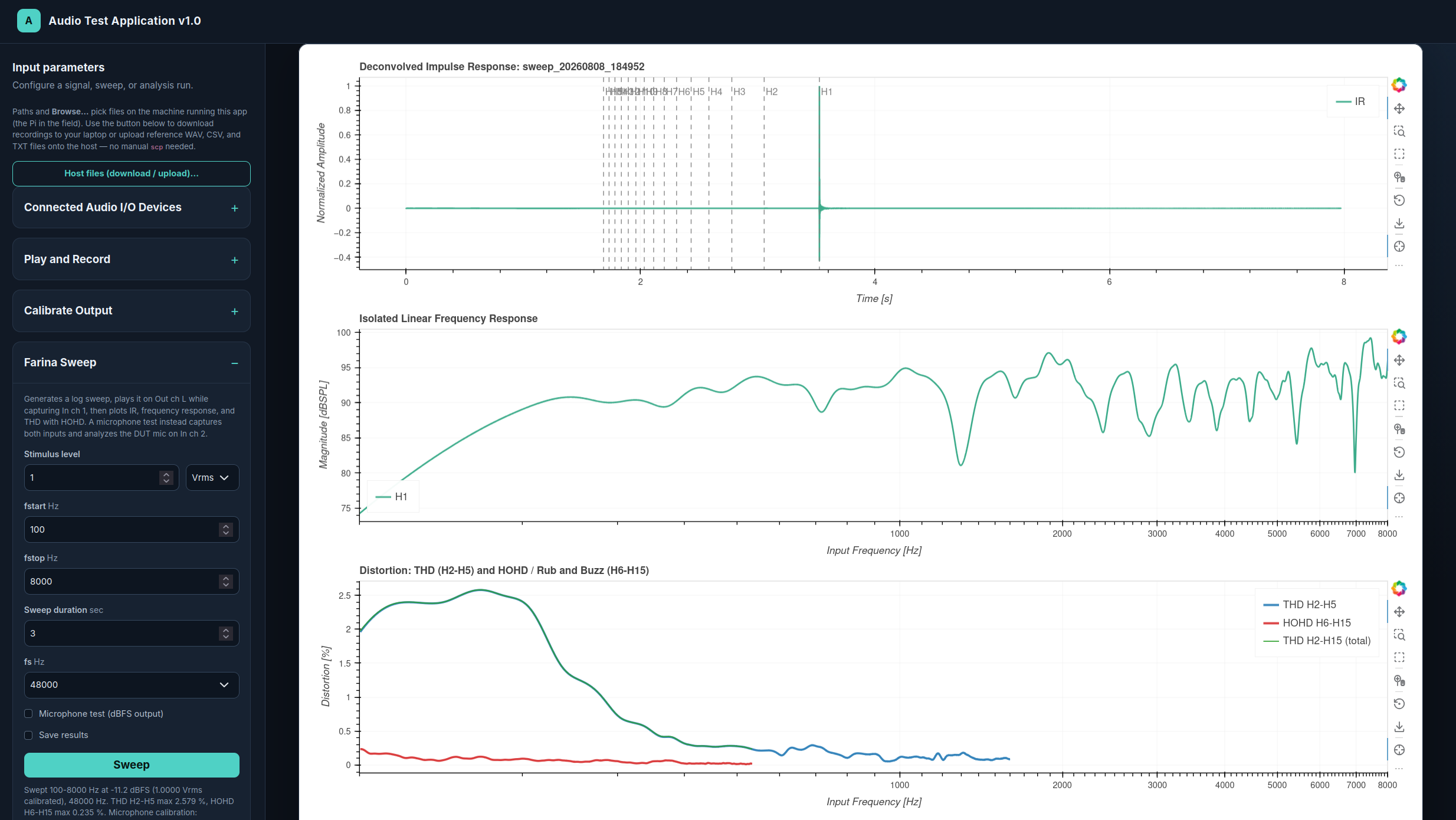
Python measurement toolkit—and browser dashboard—for loudspeaker and audio-system validation on real hardware. Highlights include:
Stimulus generation — noise and exponential sweeps for system excitation
Play / record — drive an output while capturing from selected input devices (or record alone)
Loudspeaker characterization — frequency response, distortion, and related impulse-response views from sweep captures
Microphone tests — DUT mic measurements against a reference path, with optional speaker flattening so the mic—not the playback chain—is what you score
Microphone calibration — convert digital levels to SPL using a known calibrator tone
Speaker equalization — measure-and-correct workflows to flatten a reference loudspeaker for cleaner mic work
Speech quality (MOS) — non-intrusive MOS-style scoring on speech WAV files (no clean reference transcript required)
Capture analysis — waveform, spectrum, spectrogram, and level statistics on recorded takes
Runs on lab benches and remote hosts (including Raspberry Pi-class deployments). Implementation details are proprietary.